
Why Recipes Fail: The Case for Adaptive Cooking Guidance
Static recipes cannot account for real-world variables. Adaptive cooking guidance uses sensing and software to make home meals more consistent and safer.
The Hidden Variables Behind Every Recipe

A recipe may say “sear for three minutes” or “bake at 400°F until done,” but those instructions describe ideal conditions—not the messy reality of a home kitchen. Pan material, burner output, oven calibration, ingredient size, starting temperature, and even kitchen altitude can change the result. A cold, crowded skillet may steam chicken instead of browning it, while a dark baking sheet can accelerate browning around the edges. The same time-and-temperature instructions can therefore produce very different meals.
Cooking skill adds another variable. Experienced cooks notice sizzling changes, surface color, aroma, and texture, then adjust instinctively. Beginners and busy home cooks may not know which signals matter or when to respond. This gap explains why static recipe design often leads to undercooked centers, dry proteins, uneven vegetables, and wasted ingredients. Better cooking consistency does not require removing human judgment; it requires giving people timely information about what is actually happening in the pan or oven. That is the promise of adaptive cooking: translating changing conditions into useful, understandable guidance.
From Fixed Instructions to Responsive Guidance
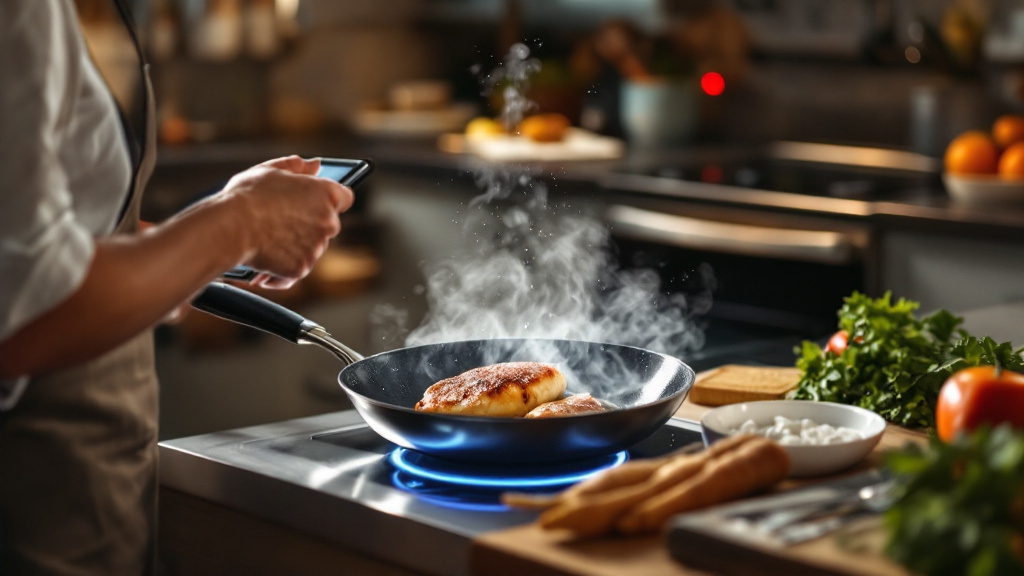
Adaptive cooking guidance treats a recipe as a flexible sequence of decisions rather than a fixed list of timers. Sensors can monitor pan temperature, oven heat, food cues, smoke, and whether cookware is present. Software can then compare those conditions with the intended cooking stage and provide a specific next step: lower the burner, wait for the pan to recover, spread ingredients apart, or continue until a target temperature is reached. Instead of asking a cook to guess whether “medium heat” is correct, the system can respond to what the food and equipment are doing.
This approach also connects steps that recipes often treat separately. A smart kitchen system might coordinate oven preheating with stovetop searing, recognize when a skillet is ready to transfer, and adjust timing if browning takes longer than expected. Embedded AI can help interpret patterns across sensors and recipes without turning the cook into a passive observer. The best adaptive instructions remain concise and explain the reason behind an adjustment. They support confidence, preserve choice, and make recipe design more realistic for different appliances, ingredients, experience levels, and household schedules.
Reliable Cooking Without Losing the Human Touch

The goal of adaptive cooking is not to automate every decision or make recipes feel mechanical. It is to handle the monitoring that distracts people from the meal itself while leaving meaningful choices in their hands. A cook can still choose preferred doneness, seasoning, texture, and serving time. The system simply provides a clearer view of heat, timing, and food progress, helping the cook act before a small deviation becomes a failed dish. Manual controls and overrides remain essential, especially when household preferences or unexpected ingredients require a change of plan.
For busy households, this model can improve more than convenience. It can reduce forgotten burners, overheating, and unsafe unattended operation while helping beginners build practical intuition. Over time, responsive feedback may teach why a pan needs to recover heat or why crowded vegetables brown unevenly. That combination of safety, education, and flexibility makes adaptive cooking a compelling direction for home appliances and recipe services. When guidance reflects real conditions instead of ideal assumptions, cooking consistency becomes more attainable—and human judgment becomes more informed, not less important.